
In the debate on the sustainability of materials, plastics are often the focus of attention. However, assessing the true environmental impact of a plastic product is not as straightforward as it might seem.
For this reason, more and more companies and institutions are using a scientific tool called LCA – Life Cycle Assessment.
By 2026, LCA had become a key element for companies wishing to demonstrate the sustainability of their products and improve their production processes.
What is Life Cycle Assessment (LCA)?
Life Cycle Assessment is a standardised methodology that enables the environmental impact of a product to be assessed throughout its entire life cycle.
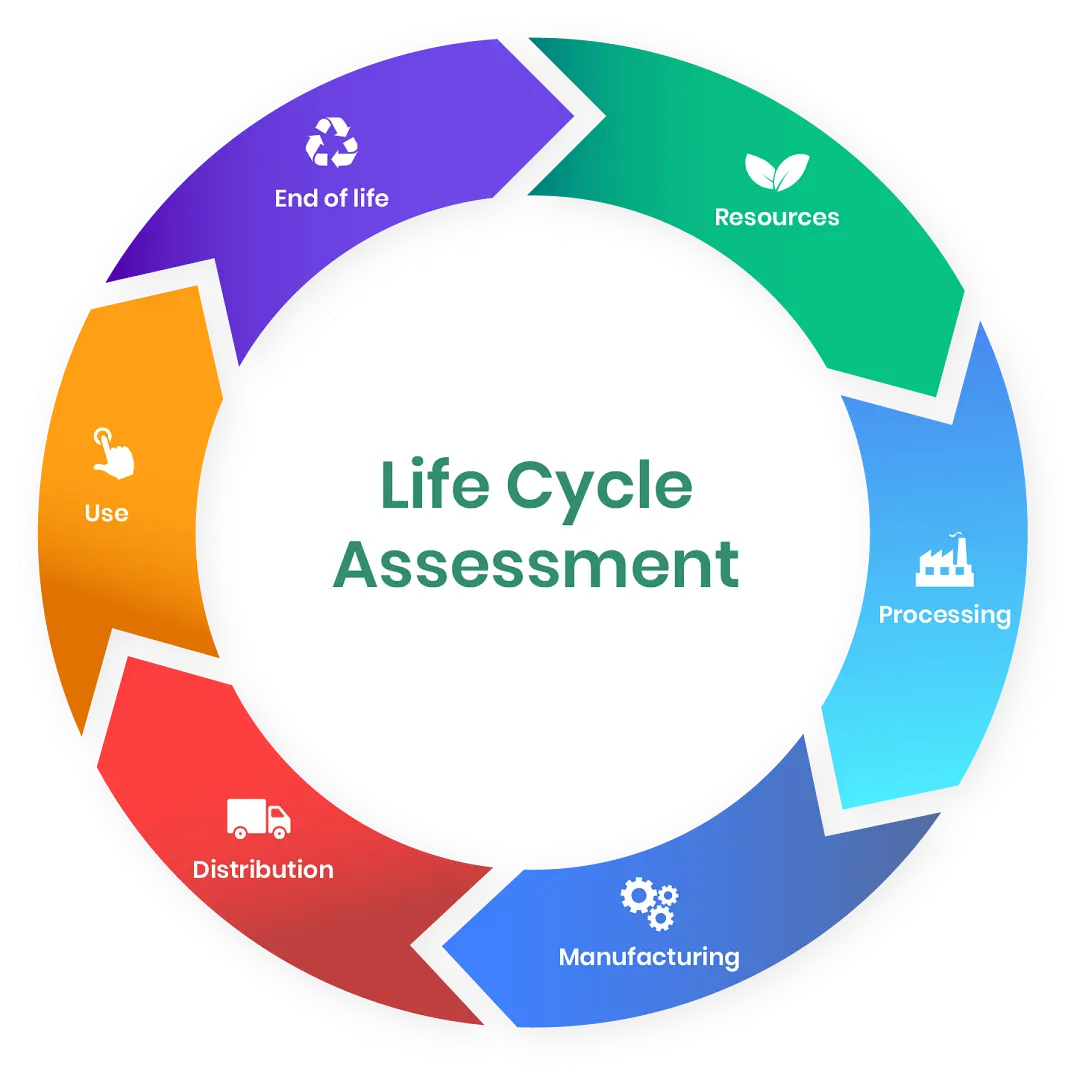
This approach analyses every stage of the product’s life cycle:
- extraction of raw materials
- manufacturing
- transport
- use
- end-of-life (recycling, disposal, recovery)
The aim is to obtain a comprehensive and objective view of the environmental impact, avoiding partial or misleading assessments.
Why LCA is important for plastics
Plastics are often criticised for their environmental impact, but an LCA analysis can reveal a much more complex picture.
In many cases, in fact, plastic products can be more sustainable than alternatives such as glass or metal, especially when factors such as the following are taken into account:
- lower weight (fewer transport emissions)
- lower energy consumption during production
- longer lifespan
LCA therefore allows sustainability to be assessed scientifically, based on real data.
The stages of LCA analysis
1. Defining the objectives : in this stage, we determine what is to be analysed and for what purpose. For example:
- comparison between plastic and other materials
- analysis of a specific product
- improvement of a production process
2. Life Cycle Inventory (LCI) : all data relating to material and energy flows are collected:
- resource consumption
- emissions
- energy use
- waste generated
This is one of the most complex and important stages.
3. Impact assessment (LCIA) : the data collected is analysed to calculate various environmental indicators, including:
- CO₂ emissions
- water consumption
- pollution
- use of natural resources
4. Interpretation of results : finally, the results are interpreted to identify potential improvements.
Applications of LCA in the plastics industry
- New product development : companies can design more sustainable products right from the development stage.
- Material selection : LCA helps to select the most environmentally efficient material.
- Communication and marketing : companies can demonstrate the sustainability of their products in concrete terms.
- Regulatory compliance : an increasing number of regulations require data based on LCA analyses.
Plastic vs other materials: one of the most interesting uses of LCA is comparing different materials. In many cases, the analysis shows that:
plastic has a lower transport impact
requires less energy to produce
can be more efficient over its overall life cycle
This does not mean that plastic is always the best choice, but that each case must be assessed on its own merits. The use of recycled plastic can significantly reduce environmental impact. The main benefits include:
- lower energy consumption
- reduced emissions
- less use of virgin raw materials
LCA allows these benefits to be quantified accurately.
The challenges of LCA
Despite its advantages, life cycle assessment presents a number of challenges:
- complex data collection
- the need for technical expertise
- variability in results depending on conditions
However, digital tools are making LCA increasingly accessible.
In the future, LCA will be increasingly integrated into business processes:
- integration with digital systems
- real-time use in production processes
- linkage with the Digital Product Passport
- greater standardisation at European level
Life Cycle Assessment is a fundamental tool for objectively assessing the sustainability of plastics. For companies adopting LCA means not only improving environmental impact, but also increasing transparency and competitiveness in the market.