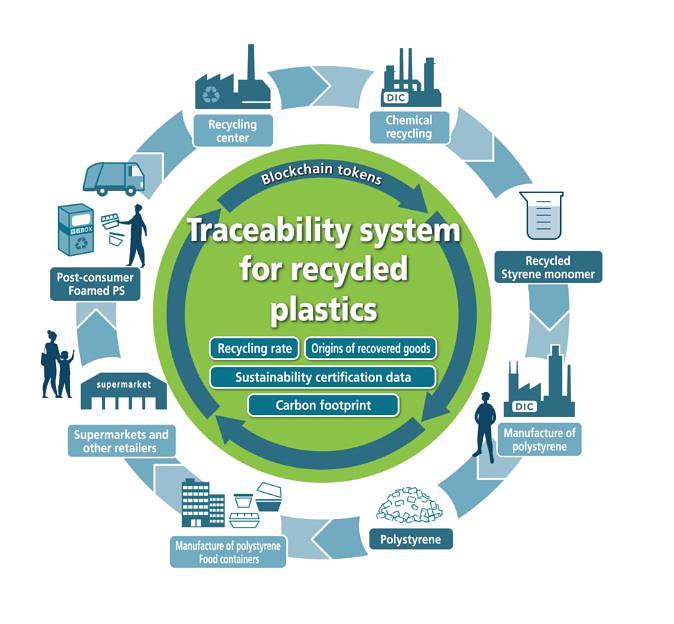

In recent years, the plastics industry has been undergoing a profound transformation, driven not only by environmental concerns but also by new digital technologies. Among the most significant innovations is the concept of plastic traceability, which is becoming increasingly central to European industrial strategies.
In 2026, one of the most talked-about tools is the Digital Product Passport (DPP), a digital system that enables the collection and sharing of detailed information about a product throughout its entire life cycle.
For companies in the plastics sector, such as Germanplast, this development represents a major opportunity to improve transparency, sustainability and competitiveness.
What is plastic traceability?
Plastic traceability refers to the ability to track a material throughout the entire production chain, from the production of the raw material right through to the end of the product’s life.
This means knowing:
- where the plastic comes from
- what processes it has undergone
- whether it contains recycled material
- how it can be disposed of or recycled
This information is increasingly in demand from customers, institutions and industrial partners.
Digital Product Passport: what it is and how it works
The Digital Product Passport is a digital tool that brings together all relevant information about a product in a single, accessible system.
It may include data such as:
- material composition
- percentage of recycled plastic
- carbon footprint
- recycling instructions
- origin of raw materials
This information is generally linked to the product via:
- QR codes
- RFID tags
- shared digital platforms
Why it is important for the plastics industry
The introduction of traceability represents a significant change for the entire plastics supply chain.
Greater transparency : Companies can demonstrate the origin and quality of the materials used.
Support for the circular economy : Knowing exactly what a product is made of facilitates recycling and reuse.
Regulatory compliance : New European regulations are increasingly moving towards mandatory material traceability.
Impact on companies in the sector : For companies working with plastics, the adoption of traceability systems entails a number of operational changes.
Process digitalisation : Information must be collected and managed in a structured manner.
Collaboration within the supply chain : All players in the supply chain must share data and information.
Technological investments : IT systems and monitoring tools are becoming increasingly important.
Competitive advantages
Companies that are the first to adopt these technologies can gain significant advantages:
- greater customer trust
- access to new markets
- differentiation from competitors
- improved operational efficiency
Practical applications
Plastic traceability can be applied across various sectors:
Packaging : Monitoring of packaging and its recyclability.
Automotive : Monitoring of materials used in components.
Electronics : Material management to facilitate end-of-life recovery.
Challenges and critical issues
Despite the benefits, implementing traceability presents a number of challenges:
- high initial costs
- the need for common standards
- data management throughout the supply chain
- integration with existing systems
The future of plastics is digital
The combination of sustainability and digitalisation represents the future of the plastics industry.
In the coming years, tools such as the Digital Product Passport are likely to become mandatory across various industrial sectors.
The traceability of plastics and the Digital Product Passport represent one of the most exciting innovations for the future of the industry.
For companies such as Germanplast, investing in these technologies means not only complying with regulations, but also seizing new opportunities for growth and innovation.